Air Conditioning Maintenance for Cooling Equipment
Air conditioning maintenance sounds like one of those phrases designed to make homeowners nod politely while secretly thinking about lunch. Fair enough. It is not glamorous. Nobody throws a party because the refrigerant charge is correct. Nobody brags at dinner that their evaporator coil has been inspected by a qualified air conditioning contractor, although frankly, in some neighborhoods that would be a welcome improvement over hearing about pickleball.
Still, cooling equipment has a way of getting everyone’s attention when it stops doing its one job. A hot room is not subtle. A struggling air conditioner does not whisper. It groans, short-cycles, blows lukewarm air, or quietly raises energy use while pretending everything is fine. That last one is particularly rude.
Air conditioning maintenance is the practical work that keeps cooling equipment operating as intended. It belongs in the same real-world family as air conditioning repair, furnace repair service, heat pump installation, water heater repair, plumbing leak repair, drain cleaning, and all the other trades that keep a building from turning into an expensive weather experiment. The U.S. Trade world has long treated plumbing, heating, and air-conditioning as specialty work, and for good reason. These systems touch comfort, safety, energy use, building performance, and, occasionally, the patience of every person under the roof.
Cooling equipment is not just “the thing outside”
Most people point at the outdoor unit and call it the air conditioner. That is understandable. It is the noisy metal box with a fan, so it gets the fame. But cooling equipment is a system, not a lawn ornament with ambitions.
A central air conditioner or heat pump depends on indoor and outdoor components, refrigerant moving through the system, airflow through ducts or air handlers, electrical controls, and a proper match between equipment capacity and the space it serves. If one piece drifts out of line, the whole arrangement can become less efficient, less reliable, or both. HVAC work exists because these pieces are linked. A heating contractor or air conditioning contractor does not just stare solemnly at the condenser and hope the answer reveals itself. The technician checks how the equipment was installed, how it is operating, whether it is being maintained, and whether the supporting systems are doing their part.
That supporting cast matters. Electrical work associated with heating and cooling equipment may require an electrician. Plumbing and HVAC often overlap in buildings because mechanical systems do not live in tidy little boxes just to make business cards easier. Duct cleaning may be part of the larger service picture. Plumbing work may be related to heating and cooling equipment in certain installations. A gas installation service may matter on the heating side. A furnace repair service may be part of the same contractor’s wheelhouse as air conditioning maintenance. The trades are separate where they need to be, but in the field, they often meet in the same utility room and argue over who gets the better flashlight.
What air conditioning maintenance actually means
Air conditioning maintenance is not a magic blessing performed over the equipment before summer. It is a set of professional checks, adjustments, cleaning, and service tasks intended to keep the system operating properly. The exact work depends on the equipment type, age, design, installation, and condition. A simple residential cooling system needs different attention than a commercial HVACR system in a larger building. A heat pump that handles both heating and cooling brings its own considerations. A system with duct issues may need more than a quick look at the outdoor cabinet.
The most useful maintenance visit is not rushed. It is not a sticker slapped on the unit and a dramatic invoice. It is a measured look at performance. The technician considers the equipment as installed, not as imagined by a brochure. Proper installation and proper maintenance are linked. If the equipment was sized incorrectly, charged incorrectly, or installed with sloppy airflow conditions, maintenance can help identify symptoms, but it cannot rewrite physics with a polite smile.
Correct equipment sizing is a major part of quality HVAC installation. So is correct refrigerant charging. Proper refrigerant charge in an air conditioner or heat pump can reduce energy consumption and lower the risk of failure. That single point is worth lingering on because it is one of those technical details that sounds small until it becomes expensive. Refrigerant is not a seasoning. More is not automatically better, less is not automatically efficient, and guessing is not a method. The correct charge supports the system’s ability to move heat as designed.
A good air conditioning tune-up should respect that reality. It should not treat maintenance as a generic ritual. It should look for operating conditions that affect performance, reliability, and energy use. If the system is dirty, misapplied, poorly charged, airflow-starved, or suffering from a control or electrical issue, the equipment may still run, but “running” is not the same as “running well.” A car can also run with a flat tire, at least briefly. That does not make it a transportation strategy.
The difference between maintenance and repair
Maintenance and repair are cousins, not twins. Air conditioning maintenance aims to reduce trouble, catch developing problems, and preserve proper operation. Air conditioning repair service steps in when something has already failed, is failing, or is no longer performing acceptably. The line can blur during a visit. A technician may arrive for a tune-up and find a repair need. Or a customer may call for air conditioning repair and discover the underlying issue has been building for a long time because the system has not been maintained.
That is not a moral failure. Buildings are busy. People notice the equipment when comfort changes. The cooling system may have been dropping hints for weeks, but hints from mechanical equipment are easy to miss. A slightly longer run time does not always cause alarm. A little more noise might blend into the background. Then one warm afternoon, the system loses its charm and everyone becomes an amateur HVAC diagnostician.
Maintenance is the less theatrical option. It asks the system how it is doing before the system answers by quitting. Repair is still essential, of course. Even well-maintained equipment can need service. Components age. Conditions change. Installation quality varies. Maintenance reduces avoidable trouble, but it does not grant immortality. If anyone promises otherwise, check whether they are also selling magic beans near the thermostat.
Why refrigerant work is not a hobby
There is a reason refrigerant service belongs with trained technicians. Under federal rules, air conditioners and refrigeration equipment are treated as appliances for refrigerant management purposes, and technicians involved in maintenance, service, repair, or installation can include contractor employees and installers. That matters because refrigerant handling is not just a matter of attaching gauges and looking confident.
A qualified air conditioning contractor understands that refrigerant charge affects energy use and failure risk. The technician also understands that charging a system is part of a broader diagnostic picture. If refrigerant charge is wrong, the next question is why. Was the installation incorrect? Is there a leak? Has someone previously serviced the unit improperly? Is the measured condition being affected by airflow or other system problems? A good technician resists the temptation to treat refrigerant as a quick fix for every complaint.
Homeowners and building managers do not need to become refrigerant experts. They do need to know enough to hire wisely. If a contractor treats refrigerant casually, that is not charming. It is a warning sign wearing work boots.
The maintenance visit: what should feel normal
A professional maintenance appointment should feel methodical. Not stiff, not theatrical, just organized. The technician should ask about comfort issues, unusual sounds, recent repairs, system history, and whether the equipment has been keeping up. The questions matter because a building tells stories. One room staying warm, a system running longer than it used to, or an air conditioner that only misbehaves during peak heat can all point toward different causes.
The technician should also pay attention to the system as a whole. Cooling equipment depends on airflow, controls, electrical components, refrigerant circuit performance, and installation conditions. Depending on the contractor’s scope, related services may include duct cleaning or plumbing and electrical work associated with heating and cooling equipment. A company that also offers plumber services, electrician services, furnace repair service, water heater installation, rooter service, hydrojetting, or septic system service may have a broad mechanical background, but the important thing is that the right qualified person handles the right task.
A maintenance visit is also a good time for plain language. Customers should not need a decoder ring. If the technician finds a concern, the explanation should connect the issue to comfort, energy use, reliability, or safety. “It’s bad” is not a diagnosis. “This condition can reduce cooling performance and may increase failure risk” is at least a useful start. Even better is a specific explanation tied to the equipment in front of them.
Here is a compact homeowner sanity check for a worthwhile air conditioning tune-up:
- The technician reviews system operation, not just the outdoor unit’s appearance.
- Refrigerant charge is treated as a measured technical matter, not a guess.
- Airflow, controls, and electrical conditions are considered as part of performance.
- The contractor explains repair recommendations in practical language.
- Maintenance findings are connected to comfort, energy use, or reliability.
That is one of the few lists worth having. Tape it inside your mental utility closet.
Installation quality follows maintenance around like a shadow
Maintenance cannot be separated from installation. A cooling system installed with poor sizing or improper charge may create problems that show up later as service calls. ENERGY STAR guidance on quality HVAC installation highlights correct equipment sizing and refrigerant charging for good reason. A system that is too large, too small, or improperly charged can struggle in ways that maintenance alone may not fully solve.
This is where homeowners can get frustrated. They call for air conditioning maintenance expecting a tune-up, and the technician says the system has an installation-related issue. That can sound like deflection, especially if the equipment has been running for years. But “it runs” is a low bar. A system can operate while still wasting energy, stressing components, or failing to deliver consistent comfort. The equipment may have been limping politely for a long time.
The best contractors handle this conversation carefully. They do not use installation defects as a scare tactic. They explain what can be maintained, what can be repaired, and what may require correction beyond a standard maintenance visit. Sometimes the right move is a modest repair. Sometimes the system needs a deeper evaluation. Sometimes, especially when equipment and building needs no longer match, replacement or heat pump installation enters the conversation. That does not mean every service call should become a sales pitch. It means the contractor should know the difference between a tune-up, a repair, and a system design problem.
Air conditioning repair is not failure, it is information
People often treat an air conditioning repair call like bad news. It can be, especially if the timing is terrible. Cooling equipment seems to enjoy failing during hot weather, holiday weekends, or right before guests arrive. Mechanical systems have a mischievous sense of occasion.
But a repair call also gives useful information. It reveals how the system responds under stress. It may show whether maintenance has been effective. It may uncover installation concerns, electrical issues, airflow restrictions, or refrigerant problems. For an air conditioning repair service, the goal is not just to make cold air happen for the next hour. The goal is to restore proper operation and reduce the chance of repeat trouble where possible.
A repair technician should be willing to say when a fix is a fix and when it is a temporary measure. That honesty matters. There are times when repairing existing equipment makes sense. There are also times when repeated repair costs point toward replacement. The trade-off depends on condition, application, reliability needs, and the customer’s plans for the building. A good contractor does not pretend every old unit deserves a heroic rescue. Nor does a good contractor condemn a serviceable system just because a shiny new one would photograph nicely.
The wider mechanical picture
Air conditioning does not live alone. Many service businesses operate across plumbing, heating, ventilation, air conditioning, and related trades because buildings need coordinated mechanical care. A plumber may handle plumbing leak repair, plumbing repiping, water softener installation, water heater repair, or water heater installation. A heating contractor may handle furnace repair service or heat pump installation. Electrical work associated with equipment may require an electrician. A lighting contractor works in another specialized area. Septic system service, drain cleaning, rooter service, and hydrojetting belong to the larger world of keeping water and waste moving where they should, which is a more heroic job than it sounds.
Why mention these in an article about cooling equipment? Because property owners often experience building problems as one big inconvenience, not as separate trade classifications. Water near equipment may look like an air conditioning problem, a plumbing problem, or both. Comfort complaints may involve heating and cooling equipment, duct conditions, controls, or electrical service. A contractor’s ability to recognize boundaries matters. The right professional knows when the issue belongs to HVAC, when it belongs to plumbing, when it belongs to electrical, and when several trades need to coordinate instead of glaring at each other across the mechanical room.
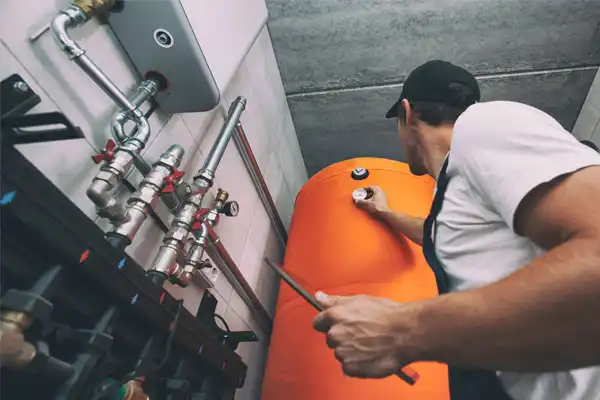
That boundary-setting protects customers. It also protects the work. A technician who knows cooling equipment should not casually perform unrelated electrical work beyond their qualification. A plumber should not guess at refrigerant service. A contractor offering multiple services should still send the right person for the job. Broad capability is valuable only when it comes with discipline.
Commercial, residential, and the “same but not really” problem
The principles of air conditioning maintenance apply broadly, but the settings vary. Residential systems serve homes, families, pets, and that one upstairs bedroom that has been “a little warm” since the invention of drywall. Commercial systems may serve offices, shops, institutional spaces, or industrial settings. HVACR contractors work across residential, commercial, industrial, institutional, and governmental systems, and the scale changes the maintenance conversation.
In a home, comfort complaints are often immediate and personal. Someone is too hot in the bedroom. The living room never cools right. The air conditioner seems louder than last summer. In commercial spaces, maintenance also touches business continuity, occupant comfort, equipment access, scheduling, and sometimes more complex system arrangements. The stakes can be different, but the core idea remains: installed equipment needs competent maintenance and service.
The temptation in both settings is to delay attention until the equipment misbehaves dramatically. That approach works beautifully if the goal is to meet your technician during the busiest part of the cooling season while everyone else in town has made the same life choice. Maintenance done before peak demand is less dramatic, and less drama is one of the finest luxuries in mechanical contracting.
What customers should expect from a capable contractor
A capable air conditioning contractor brings more than tools. Tools are important, certainly. A technician without tools is just a person with opinions. But judgment is the real value. The contractor should understand installation, maintenance, repair, and the supporting conditions that influence cooling performance. They should know how heating and cooling systems fit into the larger building. They should communicate clearly when a problem requires a different trade or a deeper evaluation.
The contractor should also avoid pretending that every system is the same. A heat pump is not merely an air conditioner with a winter hobby. A furnace paired with an air conditioning system brings different service considerations than a heat pump installation. Ducted equipment has different concerns than other cooling arrangements. Commercial equipment differs from residential equipment. Maintenance should match the system, not the technician’s favorite script.
A useful contractor relationship feels steady. You should be able to ask questions without getting fogged by jargon. You should receive recommendations that distinguish immediate repair needs from maintenance observations and longer-term concerns. If replacement is discussed, the conversation should include sizing and installation quality, not just brand names and glossy promises. Correct sizing and correct refrigerant charging matter more than a sales brochure’s font choices, though I admit some of those fonts are very confident.
A short note on do-it-yourself enthusiasm
There is nothing wrong with a customer paying attention to their cooling system. In fact, attentive owners usually describe symptoms better, notice changes sooner, and make better maintenance decisions. But there is a clear line between observation and technical service. Refrigerant work, electrical diagnostics, and repairs to cooling equipment belong with qualified professionals. The same common sense applies across trades. Most people would not attempt gas installation service after watching a short video. They should bring the same humility to air conditioning repair.
That does not mean owners are helpless. They can keep records, schedule maintenance, report symptoms clearly, and choose contractors carefully. They can pay attention to whether rooms are cooling evenly, whether the equipment sounds heat pump installation company different, or whether repair calls are becoming frequent. Those observations help technicians. Good field work often begins with a customer saying, “It used to do this, and now it does that.” That sentence has solved more service mysteries than any dramatic gadget.
When maintenance reveals bigger decisions
Sometimes air conditioning maintenance leads to an uncomfortable but useful conversation. The system may need repair. It may have installation concerns. It may be nearing the point where continued repair is less sensible than replacement. It may be a candidate for heat pump installation if the building’s needs and the contractor’s evaluation support that path. None of these decisions should be automatic.
The trade-off is practical. Repair may cost less now and make sense for equipment that is otherwise performing well. Replacement may make sense when the equipment no longer meets the building’s needs or when repeated failures undermine reliability. Maintenance findings should inform the decision, not pressure it. A good contractor lays out what they see, what it means, and which options are reasonable. The customer decides with clear eyes, not under a cloud of panic and lukewarm supply air.
One of the best signs of a trustworthy contractor is comfort with nuance. Mechanical systems rarely offer cartoon-simple answers. The honest answer may be, “This repair is reasonable, but keep an eye on the system,” or “Maintenance will help, but it will not correct the installation issue,” or “Before replacing equipment, we need to evaluate sizing and charge properly.” That kind of answer is less flashy. It is also more useful.
The maintenance mindset that saves headaches
Air conditioning maintenance works best when treated as routine care rather than emergency superstition. Cooling equipment deserves scheduled attention because it is a real mechanical system with refrigerant, airflow, electrical controls, and installation requirements. It is not a decorative appliance that happens to lower the temperature when flattered.
For property owners, the goal is simple: keep the system operating properly, reduce avoidable energy waste, lower the risk of preventable failures, and catch issues before they become sweaty emergencies. For contractors, the goal is disciplined service: maintain what can be maintained, repair what needs repair, identify installation problems when they affect performance, and involve the right trade when the issue crosses into plumbing, electrical, heating, or other specialty work.
If that sounds practical rather than glamorous, good. Practical is the point. Air conditioning maintenance is not meant to dazzle anyone. It is meant to keep cooling equipment dependable while everyone goes about life without thinking about refrigerant charge, equipment sizing, or the delicate diplomacy between an air conditioning contractor, a plumber, an electrician, and the poor thermostat blamed for everything.
A well-maintained system is quiet in the best sense. It does not demand attention. It does not turn a Tuesday afternoon into a service drama. It does not leave people standing in front of vents with suspicious expressions. It simply does its job, which is exactly what good mechanical work should do.
Name: Service Lion Plumbing Heating Air Electric
Address: 521 W Briardale Ave, Orange, CA 92865, United States
Phone: (657) 567-7305
Website: https://callservicelion.com/
Email: [email protected]
Hours:
Monday: Open 24 hours
Tuesday: Open 24 hours
Wednesday: Open 24 hours
Thursday: Open 24 hours
Friday: Open 24 hours
Saturday: Open 24 hours
Sunday: Open 24 hours
Open-location code: R48R+WV Orange, California, USA
Map/listing URL:
https://www.google.com/maps/search/?api=1&query=Google&query_place_id=ChIJQU4LBWHV3IARtnABtyykSA4
Google Map:
Socials:
https://www.facebook.com/ServiceLionCA/
https://www.youtube.com/channel/UCR_L35QzsRTxYZtX8PxJvPw
Local Service Information
Service Lion Plumbing Heating Air Electric provides plumbing, drain, heating, air conditioning, and electrical services from its Orange, California location.The company serves homeowners and properties throughout Orange and communities across Orange County and surrounding areas.
Available services include plumbing repairs, water heater work, drain and sewer services, heating and cooling service, electrical repairs, panels, lighting, outlets, and related home-system work.
Service is available for residential properties as well as light commercial needs described within the company's local service-area information.
The company's website emphasizes locally operated service, coordinated home-system support, and practical scheduling for plumbing, HVAC, and electrical needs.
The matching public business listing shows the Orange location as open 24 hours a day, seven days a week.
For service information or scheduling, call (657) 567-7305 or visit https://callservicelion.com/.
The public map listing identifies the business at 521 W Briardale Ave, Orange, CA 92865 and can be used for location and direction information.
Popular Questions About Service Lion Plumbing Heating Air Electric
What services does Service Lion Plumbing Heating Air Electric provide?
The company provides plumbing, drain and sewer, heating, air conditioning, and electrical services. Its published services include plumbing repair, water heaters, drain clearing, sewer work, HVAC repair and installation, electrical repairs, panels, circuit breakers, lighting, outlets, and related services.
Where is Service Lion Plumbing Heating Air Electric located?
The matching business location is 521 W Briardale Ave, Orange, CA 92865, United States.
What areas does Service Lion Plumbing Heating Air Electric serve?
The company serves Orange County and surrounding communities. Its published service-area information includes Orange, Anaheim, Brea, Yorba Linda, Fullerton, Huntington Beach, Newport Beach, Costa Mesa, Irvine, Lake Forest, and additional nearby cities.
Is Service Lion Plumbing Heating Air Electric open 24 hours?
The matching public business listing shows the location as open 24 hours on Monday through Sunday.
Does Service Lion Plumbing Heating Air Electric work on drains and sewer lines?
Yes. Published services include drain clearing, rooter service, camera inspection, hydro jetting, sewer line repair and installation, water line work, slab leak detection, and trenchless sewer line repair.
Does Service Lion Plumbing Heating Air Electric provide heating and air conditioning service?
Yes. Its published HVAC services include air conditioning repair and installation, heating service, furnace work, heat pumps, air ducts, indoor air quality assessments, and thermostat installation.
Does Service Lion Plumbing Heating Air Electric provide electrical service?
Yes. Published electrical services include repairs and installations, electrical panels, circuit breakers, safety inspections, lighting, outlets and switches, surge protection, generators, and EV charging equipment installation.
How can I contact Service Lion Plumbing Heating Air Electric?
Call (657) 567-7305.
Email: [email protected]
Website: https://callservicelion.com/
Facebook: https://www.facebook.com/ServiceLionCA/
Landmarks Near Orange, California
Old Towne Orange Historic District
A central historic district and useful geographic reference point for the Orange community.
Plaza Park
A well-known public gathering point in the center of Old Towne Orange.
Orange Public Library & History Center
A civic landmark serving residents near central Orange.
Hart Park
A major public park and recreation area south of central Orange.
Eisenhower Park
A public park serving neighborhoods in northern Orange.
Santiago Oaks Regional Park
A regional recreation and open-space landmark on the eastern side of Orange.
Irvine Regional Park
A large regional park and recognizable reference point east of the city.
Orange Park Acres
A distinctive residential community and service-area reference point in eastern Orange.
El Modena
An established Orange neighborhood that provides a practical local coverage reference.
Glassell Street
One of the city's principal north-south streets and a useful route through central Orange.
Lincoln Avenue
A major east-west roadway serving northern Orange and nearby communities.
State Route 55
A primary regional freeway connecting Orange with other parts of Orange County.