Heat Pump Installation vs. Central Air Conditioning: Key Differences
A homeowner once asked me, with the weary look of someone who had just spent a July weekend sleeping under a ceiling fan, “So is a heat pump just an air conditioner with a better publicist?”
Not a bad question, honestly.
Heat pumps and central air conditioners look suspiciously similar from the curb. Both may have an outdoor cabinet with a fan. Both connect to indoor equipment. Both move refrigerant through copper lines. Both can make a house feel civilized when the weather outside has turned rude. But they are not the same animal, and choosing between them affects comfort, energy bills, electrical work, heating backup, maintenance, and sometimes whether your existing furnace gets to enjoy retirement or has to keep clocking in.
If you are comparing heat pump installation with central air conditioning, the key difference is simple: a central AC cools your home, while a heat pump cools and heats it. The not-so-simple part is whether that heating function makes sense for your home, your climate, your ductwork, your electrical panel, and your tolerance for utility bills that arrive wearing tap shoes.
Let’s break it down the way a good HVAC technician would at the kitchen table, preferably with the thermostat set to something reasonable and not “meat locker.”
The basic difference hiding in plain sight
A central air conditioner removes heat from inside your home and dumps it outside. That is its entire summer job. It does not create cold air so much as it relocates heat, which sounds like a magician’s trick until you stand next to the outdoor unit and feel it blowing hot air. That heat came from your living room, your bedrooms, your kitchen, and possibly from the western-facing window you keep meaning to shade.
A heat pump does the same thing in cooling mode. During the summer, it works very much like central AC. It pulls heat out of the house and sends it outdoors.
The twist is that a heat pump can reverse the process. In heating mode, it pulls heat from outdoor air and moves it indoors. Yes, even cold outdoor air contains heat energy. This is where people look skeptical, especially if they have shoveled snow at 6 a.m. While muttering things about moving to Arizona. But refrigerant systems can extract usable https://yellow-pages.us.com/california/orange/service-lion-plumbing-heating-air-electric-b39014307 heat from surprisingly cold air. Modern cold-climate heat pumps can perform far better than the older units many people remember from decades ago.
That said, “can” and “should” are cousins, not twins. A heat pump may be an excellent primary heating system in one home and a mediocre fit in another. The difference often comes down to climate, home insulation, duct design, electricity rates, fuel prices, and the existing heating system.
Installation is not just swapping boxes
From a distance, heat pump installation and central AC installation may seem like the same appointment with different stickers on the equipment. In the field, the details separate a smooth job from a callback parade.
Both systems usually involve an outdoor unit, an indoor coil, refrigerant lines, a condensate drain, low-voltage control wiring, and a thermostat. If your home already has a forced-air furnace, the indoor coil often sits above or near the furnace cabinet. The blower in the furnace pushes air across the coil and through the duct system. That is common for both AC and heat pumps.
The difference is that a heat pump needs controls and components that allow it to reverse operation. It may require a different thermostat, additional low-voltage wiring, a defrost control strategy, and compatibility with backup heat. If the system is paired with a gas furnace, it becomes what many contractors call a dual-fuel system: the heat pump handles milder heating days, and the furnace takes over when outdoor temperatures drop below a set balance point.
That balance point matters. Set it too high, and you miss out on heat pump savings. Set it too low, and the system may struggle while the homeowner stands under a supply register wondering if the air is supposed to feel like a polite suggestion.
A central AC installation is often more straightforward because cooling is its only concern. The thermostat calls for cooling, the outdoor unit runs, the indoor blower moves air, and the house cools down. There is no heating handoff, no defrost cycle to account for, no auxiliary heat staging, and no winter performance curve to discuss over lukewarm coffee.
Still, central AC is not “simple” in the sense that anyone with a wrench and a social media account should install it. Proper refrigerant charge, airflow, duct sizing, line set practices, condensate management, and electrical safety all matter. A sloppy installation can turn premium equipment into an expensive lawn ornament.
The thermostat becomes more important with a heat pump
With central air conditioning, the thermostat has a fairly direct job. It calls for cooling when the indoor temperature rises above the setpoint. If it controls a furnace too, it calls for heat separately. A basic programmable thermostat can often manage that setup.
With a heat pump, the thermostat needs more intelligence. It may need to control compressor heating, auxiliary electric resistance heat, emergency heat, defrost behavior, or a gas furnace in a dual-fuel setup. If the wrong thermostat is installed, or if the right thermostat is wired like a spaghetti incident, the system can short cycle, run expensive backup heat too often, or fail to call the furnace when needed.
I have seen homes where a heat pump was blamed for high winter bills, only to find the thermostat was bringing on auxiliary heat far too aggressively. Electric resistance heat is useful, but it is not shy about spending your money. It is the friend who orders appetizers for the table and then leaves before the bill lands.
For central AC, thermostat errors can still cause problems, but the consequences are usually less complicated. With heat pumps, controls are part of the system design, not an afterthought.
Climate changes the math
A central air conditioner does not care much about winter. It rests. It may sit under a dusting of snow looking vaguely guilty, but it is off duty.
A heat pump earns its keep based on how well it heats in your climate. In mild and moderate regions, heat pumps can be very efficient because they move heat rather than generating it by burning fuel or using electric resistance. In colder climates, heat pump performance depends heavily on the model and system design. Standard heat pumps lose capacity as outdoor temperatures fall. Cold-climate models are engineered to keep delivering heat at lower temperatures, though even they have limits.
This is where a heating contractor should do more than glance at your square footage and announce a tonnage like a carnival guesser. A real load calculation matters. The contractor should consider insulation, windows, air leakage, ceiling height, orientation, duct condition, and local design temperatures. A 2,000-square-foot home built in 1978 with leaky ducts and single-pane windows does not behave like a 2,000-square-foot home built last year with tight construction and serious attic insulation.
Central AC sizing also needs a load calculation, especially for humidity control. Oversized air conditioners cool quickly but may not run long enough to remove moisture well. That leaves the home feeling clammy at 72 degrees, which is the HVAC version of being technically correct and practically useless.
Heat pumps face the same cooling sizing concern, with the added winter wrinkle of heating capacity. Oversizing for heat can hurt summer comfort. Undersizing for heat can make backup heat work too hard. This is why experienced contractors sometimes recommend dual fuel, staged equipment, variable-speed systems, or improvements to insulation before simply upsizing equipment.
Comfort feels different, especially in heating mode
Central AC comfort is familiar. Cool air comes from the registers. If the system is properly sized and the ducts are decent, rooms cool evenly and humidity stays under control. If not, the upstairs becomes a sauna while the basement becomes suitable for cheese storage.
A heat pump in cooling mode feels much the same as central AC, assuming comparable equipment and installation quality. The real difference shows up in heating mode.
A gas furnace often delivers supply air that feels very warm, sometimes around 120 to 140 degrees Fahrenheit depending on the system. A heat pump usually delivers lower-temperature air over a longer period. It may feel warm, but not blast-furnace warm. People switching from gas heat sometimes think something is wrong because the register air does not feel hot against the hand. The house may be maintaining temperature perfectly, but the sensation is different.
That longer, gentler heating can be comfortable once you get used to it. Temperatures stay more even, and the system may avoid the hot-cold swings of a furnace that fires hard, satisfies the thermostat, then shuts down. Variable-speed heat pumps can be especially smooth. They are less dramatic, which is exactly what you want from HVAC equipment and, frankly, most neighbors.
The ductwork gets a vote
People love talking about equipment brands. They compare SEER2 ratings, compressor types, warranties, and cabinet colors as if the outdoor unit is entering a pageant. Meanwhile, the ductwork, which actually delivers the comfort, wheezes quietly in the attic.
Both central AC and heat pumps depend on proper airflow. Bad ducts can sabotage either system. Undersized returns, crushed flex duct, leaky attic runs, and restrictive filters can cause poor comfort, high energy use, noise, coil freezing, compressor stress, and premature repairs.
Heat pumps can be especially sensitive to airflow in heating mode. Low airflow may cause high refrigerant pressures, limit trips, or poor capacity. If backup electric heat strips are installed, airflow problems can become safety and reliability concerns too.
Before installing either system, a good Air conditioning contractor should inspect the ductwork, measure static pressure when appropriate, and ask uncomfortable but necessary questions. Are some rooms always too hot or too cold? Has the old system needed frequent Air conditioning repair? Does the filter get sucked inward like it has witnessed something terrible? Those clues matter.
Sometimes the smartest money is not spent on a larger unit. It is spent sealing ducts, adding returns, replacing a restrictive plenum, or improving attic insulation. Homeowners do not always find duct modifications exciting, but comfort rarely cares what sounds exciting.
Electrical needs can be the quiet deal-breaker
Central AC requires a dedicated electrical circuit for the outdoor condensing unit and proper disconnecting means. The indoor blower also needs power, typically through the furnace or air handler. If you are replacing an existing AC with similar capacity, the electrical setup may already be suitable, though it still needs inspection.
Heat pump installation may require more electrical planning. The outdoor unit has similar power needs to an AC, but the indoor side can become more demanding if electric auxiliary heat is part of the design. Heat strips can require substantial amperage. In older homes with smaller electrical panels, adding a heat pump with electric backup may trigger a panel upgrade or load calculation by an Electrician.
Dual-fuel systems can reduce that issue because a gas furnace provides backup heat instead of large electric heat strips. But then you are dealing with gas piping, venting, combustion safety, and furnace compatibility. If the furnace is old enough to have opinions about disco, pairing it with a new heat pump may not be the best long-term plan.
A licensed Electrician may also be needed if the outdoor unit location changes, if the existing wiring is undersized, if the disconnect is outdated, or if the panel has no capacity. This is not a place for optimism with wire nuts. Electricity rewards precision and punishes improvisation.
Gas, dual fuel, and the furnace question
If your home has a gas furnace, choosing between heat pump installation and central air conditioning gets interesting.
Replacing central AC with another central AC keeps the heating side mostly unchanged. If the furnace is in good shape, properly sized, and not near the end of its life, that can be sensible. You improve cooling efficiency without redesigning winter comfort.
Installing a heat pump gives you options. You can pair it with the existing furnace for dual fuel, or you can replace the furnace with an electric air handler, depending on the home and goals. Dual fuel often works well in areas with chilly winters but not constant deep freezes. The heat pump runs during milder weather when it is efficient, and the gas furnace takes over when gas heat makes more sense.
This decision depends on utility rates. Electricity may be inexpensive in one region and painful in another. Natural gas prices vary too. Propane adds another twist because it often costs more than natural gas, making heat pumps attractive even in colder climates.
A Gas installation service may be involved if a furnace is being replaced, resized, or relocated. Proper gas line sizing matters. So does venting. A high-efficiency condensing furnace has different venting needs than an older atmospheric furnace. If someone treats gas work casually, show them the door and perhaps do not let them operate your grill either.
Furnace age is also part of the equation. If the furnace is 18 years old and needs frequent visits from a Furnace repair service, installing a new AC on top of it may be like buying fancy tires for a car with a failing transmission. On the other hand, a 7-year-old furnace with a clean heat exchanger and good blower may pair nicely with a heat pump.
Cost differences are real, but they are not one-size-fits-all
Central AC installation often costs less upfront than heat pump installation when comparing similar equipment quality and capacity. The equipment is usually simpler, and the controls are less involved. If ductwork and electrical service are already suitable, replacement can be relatively predictable.
Heat pumps tend to cost more upfront, especially cold-climate or variable-speed models. Add dual-fuel controls, thermostat upgrades, possible electrical work, or backup heat, and the project can climb. Rebates or tax incentives may offset some of that, depending on current programs and eligibility. Since programs change, homeowners should confirm details before signing a contract, not after, when everyone is suddenly “pretty sure” about paperwork.
Operating cost is trickier. A heat pump may reduce heating bills if it replaces expensive electric resistance heat, oil, or propane. It may also compete well against natural gas in mild weather. But if electricity rates are high and gas is cheap, a heat pump may not always win during cold snaps. Many dual-fuel setups aim for the best of both: efficient electric heat when conditions favor it, gas heat when temperatures or rates say otherwise.
Central AC affects cooling costs only. If your existing AC is old and inefficient, a new central AC can lower summer bills. But it will not touch winter heating costs. A heat pump might.
The better question is not “Which is cheaper?” It is “Which system gives the best lifetime value for this house?” That includes installation cost, utility rates, maintenance, repairs, expected equipment life, comfort, and whether future fuel choices matter to you.
Maintenance: similar in summer, different in winter
Both systems need regular Air conditioning maintenance. Filters need changing. Coils need cleaning. Condensate drains need attention unless you enjoy ceiling stains that resemble abstract art. Refrigerant charge, electrical components, airflow, blower operation, and safety controls should be checked by a qualified technician.
A central AC usually gets its workout in cooling season. A spring Air conditioning tune-up is often enough for many systems, though dusty environments, cottonwood fluff, pets, and heavy use Plumber may justify more attention.
A heat pump runs in both summer and winter, so it works more hours per year. That does not mean it is fragile. It does mean maintenance matters. The outdoor coil must stay clear, defrost operation should be verified, and heating performance should be checked before cold weather arrives. If the heat pump uses auxiliary heat, those controls need testing too.
Here is a short, practical maintenance comparison:
| Maintenance item | Central AC | Heat pump | |---|---|---| | Spring cooling check | Important | Important | | Fall heating check | Usually furnace-focused | Very important | | Outdoor coil cleaning | Cooling season priority | Year-round priority | | Defrost operation | Not applicable | Must be verified | | Backup heat testing | Furnace or separate system | Often integrated |
A neglected heat pump can rack up problems because it rarely gets a long vacation. A neglected central AC can do the same during a brutal summer, but at least it is not also carrying the winter shift.
Repair patterns and what tends to fail
Central AC and heat pumps share many components: compressors, capacitors, contactors, fan motors, coils, refrigerant lines, metering devices, and control boards. An Air conditioning repair service that understands refrigeration fundamentals can diagnose both cooling systems, but heat pumps add extra parts and operating modes.
Heat pumps have reversing valves, defrost boards, outdoor temperature sensors, and more complex controls. Those parts are not automatically troublemakers, but they add diagnostic layers. A central AC that is not cooling has one main operating mode to evaluate. A heat pump may cool fine but fail to heat, heat fine but frost excessively, or run backup heat when it should not.
The age and installation quality of the system usually matter more than whether it is a heat pump or central AC. Poor brazing, bad evacuation practices, incorrect charge, weak airflow, sloppy wiring, and mismatched equipment cause plenty of grief. Many repairs blamed on “the brand” began as installation sins wearing a trench coat.
If you have repeated Air conditioning repair calls on an older system, ask for a sober assessment. A good contractor will tell you when a repair buys several good years and when you are feeding a machine that has already written its resignation letter.
When central air conditioning makes more sense
Central AC still has a strong case. If you already have an efficient gas furnace, live in a region with low gas prices, and mainly need reliable cooling, central AC may be the cleanest choice. It is often less expensive upfront, familiar to technicians, and straightforward to control.
It can also make sense in homes where electrical upgrades for a heat pump would be costly. If adding auxiliary heat requires a major panel upgrade, service change, or long wiring run, the economics may shift. The same applies if your ductwork or indoor equipment is poorly suited to heat pump operation but works acceptably for cooling with a furnace handling heat.
Central AC may be preferred when homeowners value simplicity. Fewer operating modes can mean easier troubleshooting. If the furnace is newer and excellent, replacing only the AC avoids disturbing a heating system that is doing its job well. HVAC work should not be a hobby in which we replace perfectly good equipment just because the brochure looked shiny.
When a heat pump is the smarter move
Heat pump installation shines when you want one system to handle both cooling and a significant share of heating. It can be especially attractive if you currently heat with electric baseboards, electric resistance furnaces, oil, or propane. It can also make sense if your furnace is aging and you want to reduce reliance on gas.
Homes with solar power may find heat pumps appealing because more heating energy can come from electricity generated on-site. That does not make the system free to run, despite what your most enthusiastic neighbor might imply, but it can improve the overall energy picture.
A heat pump also gives flexibility. With dual fuel, you can use electricity when outdoor temperatures are mild and gas when conditions turn harsh. With a properly designed all-electric setup, you can eliminate combustion equipment inside the home. That may appeal for safety, indoor air quality, or long-term electrification goals.
The strongest candidates usually have decent insulation, reasonably tight ducts, adequate electrical capacity, and homeowners who understand that heat pump heating feels different from furnace heating. Education matters. A heat pump is not a bad furnace. It is a different heating method.
Do not ignore the rest of the mechanical room
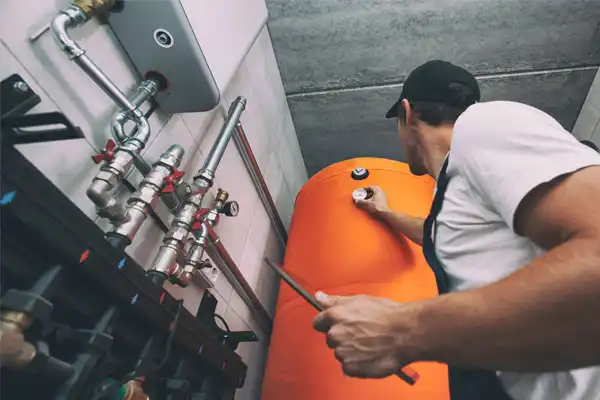
HVAC decisions rarely happen in isolation. The same utility room may contain a water heater, plumbing lines, a floor drain, a softener, and enough mystery valves to make a new homeowner question their life choices.
If you are already planning major mechanical work, it can be smart to coordinate trades. A Plumber may need to move water lines for better equipment access. Water heater installation might affect available space or venting. Water heater repair may reveal that the appliance is near replacement age, which can influence how you arrange the room. A gas furnace replacement may compete for venting routes with a gas water heater. A heat pump water heater might change electrical load calculations.
Plumbing problems also love bad timing. A condensate drain tied into a poor drain line can create nuisance shutdowns. Plumbing leak repair near HVAC equipment should happen before new equipment goes in, unless you enjoy installing expensive machinery next to a tiny indoor creek. Drain cleaning, Rooter service, or Hydrojetting may be needed if old lines back up and threaten floor-mounted equipment. If the property relies on a septic system, a Septic system service can help ensure condensate discharge and water softener discharge are handled appropriately according to local rules.
Plumbing repiping and Water softener installation can also intersect with HVAC access. I have seen pristine new air handlers boxed in by later plumbing work, leaving no service clearance. Somewhere, a future technician will say words not fit for a company brochure.
Even lighting matters. A Lighting contractor or Electrician can improve service-area lighting, which sounds minor until someone tries to diagnose a control board in a dark attic while balancing on joists. Good access and lighting reduce labor time, mistakes, and technician resentment. Technician resentment is not listed on invoices, but it is real.
The permit and code side, otherwise known as the unglamorous stuff that saves you
Permits are not thrilling. Nobody frames a permit and hangs it above the fireplace. But permitted work protects homeowners, especially with equipment that involves electricity, refrigerant, gas, condensate, and combustion.
Central AC installation may require mechanical and electrical permits. Heat pump installation may involve the same, plus additional review if backup electric heat, panel changes, or gas furnace integration is involved. Local codes vary, and so do inspection requirements.
Ask contractors how they handle permits. If the answer sounds slippery, keep asking. “We do it all the time without one” is not the flex some people think it is. It may cause trouble during a home sale, warranty claim, insurance issue, or safety inspection.
Also ask about equipment matching. Outdoor units, indoor coils, furnaces, and air handlers should be approved combinations. Mismatched systems can reduce efficiency, cause performance problems, and complicate warranty coverage.
A short homeowner checklist before choosing
Use this before you collect bids, because a prepared homeowner gets better answers and fewer sales monologues.
- Check the age and condition of your furnace, air handler, ducts, electrical panel, and thermostat.
- Gather 12 months of utility bills so contractors can compare real energy use.
- Note comfort complaints by room, season, and time of day.
- Ask whether a load calculation will be performed, not guessed.
- Confirm permits, warranties, rebates, and who handles electrical or gas work if needed.
That is one list. Treasure it. We are using restraint.
Questions worth asking the contractor
A good contractor welcomes detailed questions. A shaky one suddenly remembers another appointment. When comparing heat pump installation and central AC, ask how the system will perform on your hottest and coldest design days. Ask what happens if outdoor temperatures drop below the heat pump’s efficient range. Ask whether your ducts can move the required airflow. Ask about noise, both indoors and outdoors. Ask where the condensate will go. Ask what maintenance schedule they recommend.
If you are considering dual fuel, ask how the changeover temperature will be chosen and whether it can be adjusted after observing performance. If electric auxiliary heat is included, ask how often it is expected to run and what electrical upgrades are required. If a gas furnace remains, ask whether the blower is compatible with the new heat pump and whether the heat exchanger has been inspected.
The best answers will be specific to your home. Beware of universal promises. “This system will cut your bills in half” is not a load calculation. It is a fortune cookie with financing.
Efficiency ratings without the alphabet soup headache
Cooling efficiency is commonly expressed with SEER2, while heating efficiency for heat pumps is often rated with HSPF2. Higher numbers generally mean better efficiency, but ratings are laboratory measures. Real-world performance depends on installation, airflow, climate, thermostat settings, and maintenance.
A high-efficiency system installed on bad ductwork may disappoint. A mid-tier system installed carefully with sealed ducts and correct airflow can perform beautifully. Equipment efficiency matters, but installation quality often decides whether the promised savings show up.
Variable-speed and inverter-driven systems can improve comfort and efficiency by modulating output instead of running full blast or not at all. They tend to cost more and may involve more specialized parts. For some homes, the comfort improvement is worth it. For others, a simpler two-stage or single-stage system offers better value. There is no moral victory in buying the most complicated system if your needs are straightforward.
Noise, space, and neighbors with opinions
Outdoor units make noise. Modern equipment is generally quieter than older systems, but placement still matters. A heat pump runs during heating season too, which means the outdoor unit may operate on cold mornings when windows are closed but neighbors are still capable of complaining.
Do not place the outdoor unit under a bedroom window if avoidable. Keep it clear of dryer vents, roof drip lines, shrubs, and areas where snow piles up. Heat pumps need good airflow for both cooling and heating. In snowy climates, elevation and clearance matter because a buried heat pump is not a heat pump. It is yard sculpture.
Indoor noise depends on blower speed, duct design, return sizing, and equipment location. If your current system roars like a jet preparing for takeoff, replacing the outdoor unit alone may not fix it. Return air improvements or duct modifications may be needed.
Lifespan expectations and warranty reality
Central AC systems often last around 12 to 20 years, depending on climate, maintenance, installation quality, and usage. Heat pumps may have similar lifespans, but because they run in both heating and cooling seasons, their annual operating hours can be higher. In mild climates, this does not necessarily shorten life dramatically, but it does make maintenance more important.
Warranties vary by manufacturer and registration requirements. Parts warranties do not always include labor. Compressor warranties may differ from general parts coverage. Extended labor warranties can be worthwhile if priced fairly and backed by a contractor likely to remain in business longer than a houseplant.
Read the warranty terms. Yes, they are boring. So is flossing, and yet consequences exist.
The choice in plain English
Choose central air conditioning if you primarily need cooling, have a good existing heating system, want lower upfront complexity, and do not expect the AC replacement to solve winter bills.
Choose a heat pump if you want efficient cooling plus electric heating, have a home and climate that suit it, want dual-fuel flexibility, or are replacing an aging heating system and thinking beyond the next summer.
The right answer may also be “heat pump now, furnace later,” or “central AC now, ductwork first,” or “do not buy anything until the electrical panel is evaluated.” The best HVAC decisions are not made by equipment alone. They are made by looking at the house as a system, with all its quirks, drafts, questionable previous repairs, and that one room over the garage that refuses to behave.
A heat pump is not merely central AC with a reversible jacket. Central AC is not outdated just because heat pumps are getting attention. Both can be excellent. Both can be botched. The difference lies in design, installation, controls, climate fit, and whether the contractor takes time to understand the home before recommending a solution.
And if someone gives you a quote after standing in the driveway for four minutes and never looking at the ductwork, the thermostat, the panel, or the furnace, do what any seasoned tradesperson would do.
Smile politely. Then get another opinion.
Name: Service Lion Plumbing Heating Air Electric
Address: 521 W Briardale Ave, Orange, CA 92865, United States
Phone: (657) 567-7305
Website: https://callservicelion.com/
Email: [email protected]
Hours:
Monday: Open 24 hours
Tuesday: Open 24 hours
Wednesday: Open 24 hours
Thursday: Open 24 hours
Friday: Open 24 hours
Saturday: Open 24 hours
Sunday: Open 24 hours
Open-location code: R48R+WV Orange, California, USA
Map/listing URL:
https://www.google.com/maps/search/?api=1&query=Google&query_place_id=ChIJQU4LBWHV3IARtnABtyykSA4
Google Map:
Socials:
https://www.facebook.com/ServiceLionCA/
https://www.youtube.com/channel/UCR_L35QzsRTxYZtX8PxJvPw
Local Service Information
Service Lion Plumbing Heating Air Electric provides plumbing, drain, heating, air conditioning, and electrical services from its Orange, California location.The company serves homeowners and properties throughout Orange and communities across Orange County and surrounding areas.
Available services include plumbing repairs, water heater work, drain and sewer services, heating and cooling service, electrical repairs, panels, lighting, outlets, and related home-system work.
Service is available for residential properties as well as light commercial needs described within the company's local service-area information.
The company's website emphasizes locally operated service, coordinated home-system support, and practical scheduling for plumbing, HVAC, and electrical needs.
The matching public business listing shows the Orange location as open 24 hours a day, seven days a week.
For service information or scheduling, call (657) 567-7305 or visit https://callservicelion.com/.
The public map listing identifies the business at 521 W Briardale Ave, Orange, CA 92865 and can be used for location and direction information.
Popular Questions About Service Lion Plumbing Heating Air Electric
What services does Service Lion Plumbing Heating Air Electric provide?
The company provides plumbing, drain and sewer, heating, air conditioning, and electrical services. Its published services include plumbing repair, water heaters, drain clearing, sewer work, HVAC repair and installation, electrical repairs, panels, circuit breakers, lighting, outlets, and related services.
Where is Service Lion Plumbing Heating Air Electric located?
The matching business location is 521 W Briardale Ave, Orange, CA 92865, United States.
What areas does Service Lion Plumbing Heating Air Electric serve?
The company serves Orange County and surrounding communities. Its published service-area information includes Orange, Anaheim, Brea, Yorba Linda, Fullerton, Huntington Beach, Newport Beach, Costa Mesa, Irvine, Lake Forest, and additional nearby cities.
Is Service Lion Plumbing Heating Air Electric open 24 hours?
The matching public business listing shows the location as open 24 hours on Monday through Sunday.
Does Service Lion Plumbing Heating Air Electric work on drains and sewer lines?
Yes. Published services include drain clearing, rooter service, camera inspection, hydro jetting, sewer line repair and installation, water line work, slab leak detection, and trenchless sewer line repair.
Does Service Lion Plumbing Heating Air Electric provide heating and air conditioning service?
Yes. Its published HVAC services include air conditioning repair and installation, heating service, furnace work, heat pumps, air ducts, indoor air quality assessments, and thermostat installation.
Does Service Lion Plumbing Heating Air Electric provide electrical service?
Yes. Published electrical services include repairs and installations, electrical panels, circuit breakers, safety inspections, lighting, outlets and switches, surge protection, generators, and EV charging equipment installation.
How can I contact Service Lion Plumbing Heating Air Electric?
Call (657) 567-7305.
Email: [email protected]
Website: https://callservicelion.com/
Facebook: https://www.facebook.com/ServiceLionCA/
Landmarks Near Orange, California
Old Towne Orange Historic District
A central historic district and useful geographic reference point for the Orange community.
Plaza Park
A well-known public gathering point in the center of Old Towne Orange.
Orange Public Library & History Center
A civic landmark serving residents near central Orange.
Hart Park
A major public park and recreation area south of central Orange.
Eisenhower Park
A public park serving neighborhoods in northern Orange.
Santiago Oaks Regional Park
A regional recreation and open-space landmark on the eastern side of Orange.
Irvine Regional Park
A large regional park and recognizable reference point east of the city.
Orange Park Acres
A distinctive residential community and service-area reference point in eastern Orange.
El Modena
An established Orange neighborhood that provides a practical local coverage reference.
Glassell Street
One of the city's principal north-south streets and a useful route through central Orange.
Lincoln Avenue
A major east-west roadway serving northern Orange and nearby communities.
State Route 55
A primary regional freeway connecting Orange with other parts of Orange County.